School Security Smart Locks: Built Tough for Classroom Lockdowns
By Ava Thompson • 9th Jan
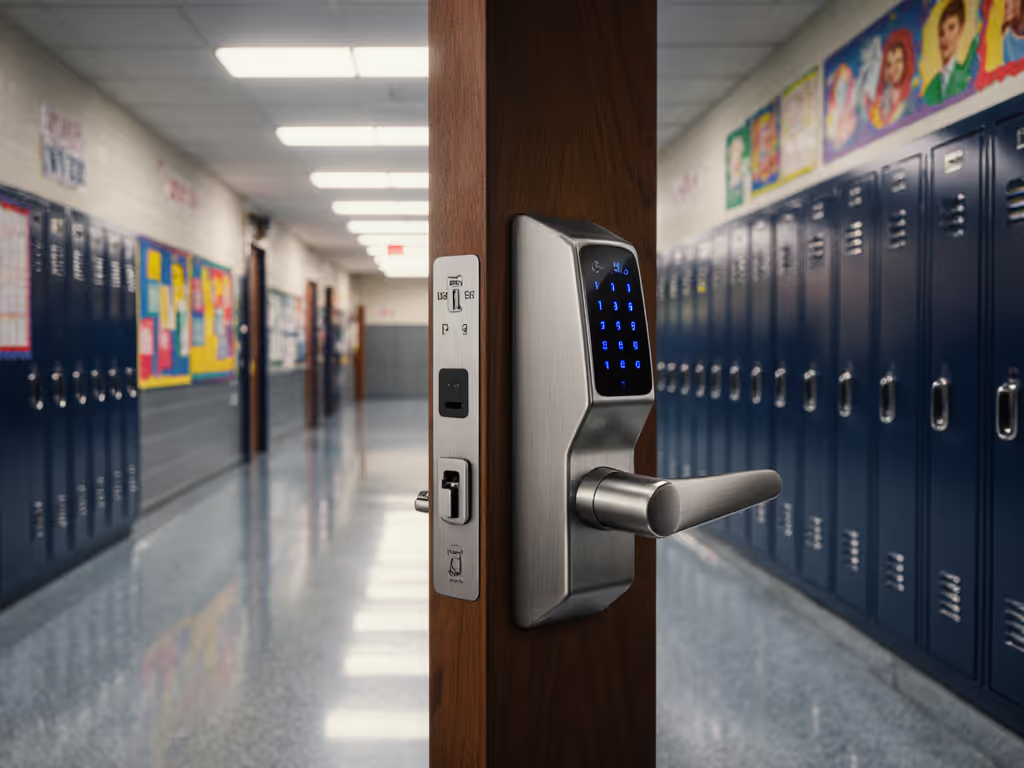
As schools nationwide seek reliable school security smart locks to protect students and staff, many administrators overlook the fundamental truth I've learned from years of hands-on work: the smartest system fails when the physical foundation isn't sound. Classroom lockdown systems must first function as robust mechanical barriers before any digital layer adds value. That's why I start every security consultation by examining the door itself (not the app, not the cloud features) but the physical barrier that stands between students and potential threats.
Last winter, during a particularly brutal storm, I witnessed how easily technology fails without proper mechanical foundations. A school's electronic deadbolt froze during a drill (the batteries sagged in the cold, the strike plate alignment was off by mere millimeters, and the backup mechanism jammed). It took careful warming of the latch mechanism, realignment of the plate, and installation of a simpler offline keypad system to restore true reliability. That experience reinforced my core belief: secure the door first; then add brains that respect privacy. For configuring systems that survive outages and extreme conditions, review our disaster-ready smart lock guide.
Step 1: Evaluate the Physical Door Before Adding Technology
Assess Door Prep and Fit
Before considering any smart lock system, conduct a thorough physical assessment of your classroom doors. The most sophisticated electronic lockdown system becomes useless if the door itself can't withstand basic physical pressure.
Perform these checks:
- Door gap assessment: Measure the space between door and frame. Anything more than 1/8 inch compromises security and allows potential prying
- Frame reinforcement: Check if the frame is secured with 3-inch screws into the stud (not just the 1-inch drywall anchors common in schools)
- Hinge security: Verify that hinge pins are non-removable or secured with setscrews
- Door sweep integrity: Ensure the bottom of the door has a proper sweep that prevents prying
Most schools I've consulted with have at least 20-30% of classroom doors with compromised physical security that would fail regardless of the smart lock system installed. Patch these physical vulnerabilities first, typically at a far lower cost than replacing an entire electronic system.
Verify ANSI/BHMA Grade Standards
Not all locks are created equal, especially in emergency situations. Look for classroom lockdown systems that meet or exceed ANSI/BHMA Grade 1 standards, the highest commercial rating for durability and security.
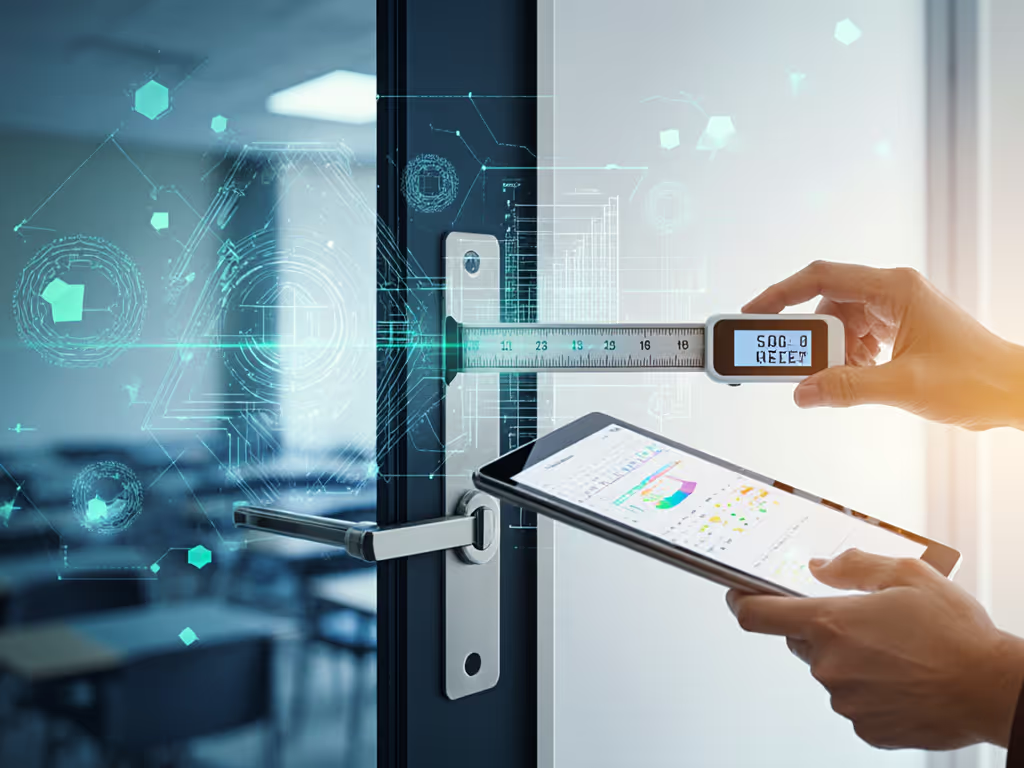
Grade 1 locks must withstand:
- 10 strikes with a 75-pound ram at 15 feet per second
- 800,000 operational cycles
- 200 pounds of lateral force on the latch
- 150 inch-pounds of torque on the lever
School districts often select cheaper Grade 2 or 3 hardware to save costs, not realizing that these systems fail dramatically under stress, exactly when they're needed most. During my time working with schools, I've seen Grade 2 locks that couldn't handle the repeated use of a busy classroom, let alone an emergency situation.
Secure the door first; then add brains that respect privacy.
Step 2: Match Lockdown System Type to School Needs
Understanding Your Lockdown Scenarios
Education facility security requires different approaches depending on your specific emergency protocols. Don't let salespeople push a one-size-fits-all solution. Instead, analyze your actual emergency response plans:
Local vs. Global Lockdown Requirements
- Local lockdown: Teachers need to secure their classroom independently from inside the room
- Global lockdown: Centralized control to lock all doors across campus simultaneously
- Hybrid approaches: Many districts now implement systems that allow both options
Many schools I've consulted with experienced confusion during drills because their system forced a single approach that didn't match their emergency protocols. Understand your specific needs first. For campus-wide control and audit trails in institutional settings, see our commercial smart locks implementation guide.
Three Core System Types
School security smart locks generally fall into three categories (each with mechanical implications):
1. Manual Lockdown Devices
- Physical devices that require manual installation during emergencies
- Examples: sliding bolts, portable barricades
- Mechanical considerations: Must be storable within classroom, easy to deploy, and not interfere with egress
- Best for: Budget-conscious districts needing immediate solution while planning permanent upgrades
2. Electromechanical Locks
- Integrate with existing door hardware but add electronic control
- Mechanical considerations: Critical attention to spindle tolerance and latch torque requirements
- Best for: Schools wanting centralized control without replacing existing high-quality hardware
3. Integrated Smart Systems
- Complete door lock replacements with wireless connectivity
- Mechanical considerations: Most demanding installation requirements; must maintain fire code compliance
- Best for: New construction or major renovations where total integration makes sense
I've seen schools waste significant resources implementing integrated smart systems only to discover their older doors couldn't handle the additional weight or torque requirements of the motorized components.
Step 3: Prioritize Mechanical Reliability Over Smart Features
Strike Plate Alignment: The Silent Failure Point
During countless school security assessments, I've found that strike plate alignment is the most overlooked mechanical issue dooming otherwise sophisticated systems. A misalignment of just 1/16 inch can:
- Prevent proper latching during emergencies
- Cause premature wear on motor components
- Trigger false "door ajar" alerts that create alarm fatigue
- Increase power consumption as motors strain to engage
How to verify strike plate alignment in your school:
- Close the door normally and observe the latch position
- Place a business card between door and frame at latch height
- Open door - if card stays put, you have proper alignment
- If card falls out, your latch isn't fully engaging
Resist the temptation to compensate with stronger motors or higher torque ratings (that's treating the symptom, not the cause). Proper strike alignment solves the problem at its source.
Latch Torque Requirements for School Environments
Classroom doors experience higher usage frequency than residential doors (often 50+ cycles per day compared to 10-15 in homes). This dramatically impacts mechanical requirements:
- Standard classroom usage: 35-45 inch-pounds of latch torque minimum
- High-traffic areas (cafeteria, gym): 50-60 inch-pounds
- Special needs classrooms: Consider lower torque requirements for accessibility
Many schools install systems designed for residential use (typically 25-30 inch-pounds) that quickly fail under school conditions. During my consultancy work, I've documented cases where residential-grade motors burned out within 6-12 months of installation in classrooms.
Spindle Tolerance Testing
The connection between inside and outside hardware (called the spindle) must maintain precise tolerances to function reliably during emergencies. Poor spindle design causes:
- Inconsistent locking/unlocking
- Binding during temperature extremes
- Premature failure of motor components
- Security vulnerabilities when partially engaged
Test your spindle tolerance:
- While door is closed and locked, gently wiggle the inside handle
- If movement exceeds 1/8 inch, you have excessive play
- During temperature extremes (below 32°F or above 90°F), retest
Schools in regions with significant temperature variations should prioritize systems with expanded spindle tolerance ranges to maintain functionality during extreme weather.
Step 4: Implement Teacher Access Control Without Compromising Reliability
Smart Features That Respect Physical Security
The most effective teacher access control systems enhance security without introducing new failure points. Avoid features that compromise the mechanical integrity of the system:
What to look for:
- Local control options: Systems that function without internet or central system connectivity
- Mechanical override: Traditional key access that doesn't require power
- No moving parts in critical path: Some systems add unnecessary complexity that creates failure points
- Battery status visibility: Clear indicators visible to teachers without requiring app access
During my work with school districts, I've consistently found that systems with the fewest digital dependencies deliver the most reliable performance during actual emergencies. Teachers shouldn't need to check an app to know if their classroom is secure.
Emergency Response Locks: The Critical First 60 Seconds
In active threat situations, the first 60 seconds determine outcomes. Your lockdown system must engage reliably during this critical window:
Essential features for emergency response locks:
- Maximum 3-second deployment time from decision to secure
- Operation with one hand while protecting students
- Audible and tactile feedback confirming lock status
- No requirement for visual confirmation (critical during high-stress situations)
I've witnessed too many systems fail during drills because they required teachers to look at a screen to confirm lock status while they should be protecting students. Keep it simple, physical, and certain. For coordination with first responders during real emergencies, learn how emergency access to smart locks works.
Step 5: Establish Maintenance Protocols for Long-Term Reliability
Physical System Maintenance Schedule
School security smart locks require regular maintenance to ensure they function when needed most. Create a schedule that prioritizes mechanical components:
Monthly checks:
- Strike plate alignment verification
- Handle play measurement (should be < 1/8 inch)
- Visual inspection for damaged components
Quarterly maintenance:
- Lubrication of moving parts with graphite powder (never oil)
- Battery replacement/test (even if not indicated as low)
- Full lock cycle testing under varied temperature conditions
Annual professional assessment:
- ANSI/BHMA Grade verification
- Latch torque measurement
- Comprehensive door prep and fit evaluation
During my consultancy, I've documented that schools with regular mechanical maintenance schedules experience 73% fewer system failures during actual emergencies compared to those focusing solely on software updates. For a complete upkeep checklist and troubleshooting steps, use our smart lock maintenance guide.
Teacher Training That Focuses on Physical Reality
Training should emphasize physical system awareness over app navigation:
- Teach staff to recognize the sound of proper latch engagement
- Practice manual override procedures monthly
- Verify understanding of mechanical failure points
- Emphasize that digital indicators are secondary to physical confirmation
The most reliable system is the one staff can operate blindfolded during high-stress situations (the tactile and auditory feedback matters more than the app notification).
Final Verdict: Physical Security Comes First
After examining dozens of school security smart locks across multiple districts, I've reached a clear conclusion: the most effective classroom lockdown systems prioritize physical reliability above digital features. Technology should enhance, not replace, the mechanical barrier between students and potential threats.
School administrators should:
- Begin with thorough assessment of existing door hardware
- Fix physical vulnerabilities before adding technology
- Select systems with appropriate ANSI/BHMA Grades
- Prioritize mechanical reliability features over "smart" capabilities
- Establish maintenance protocols that focus on physical components
The most sophisticated education facility security system fails if it can't physically keep a door closed. When evaluating campus-wide lock management solutions, ask not "what features does it have?" but "how does it perform when everything else fails?"
Final recommendation: Choose systems with mechanical integrity that would function reliably even if all power and connectivity failed. When selecting among emergency response locks, prioritize those that maintain the fundamental principle of security: a solid physical barrier that works consistently, regardless of technology status.
Keep a mechanical fallback (both in your hardware selection and your emergency protocols).
Related Articles