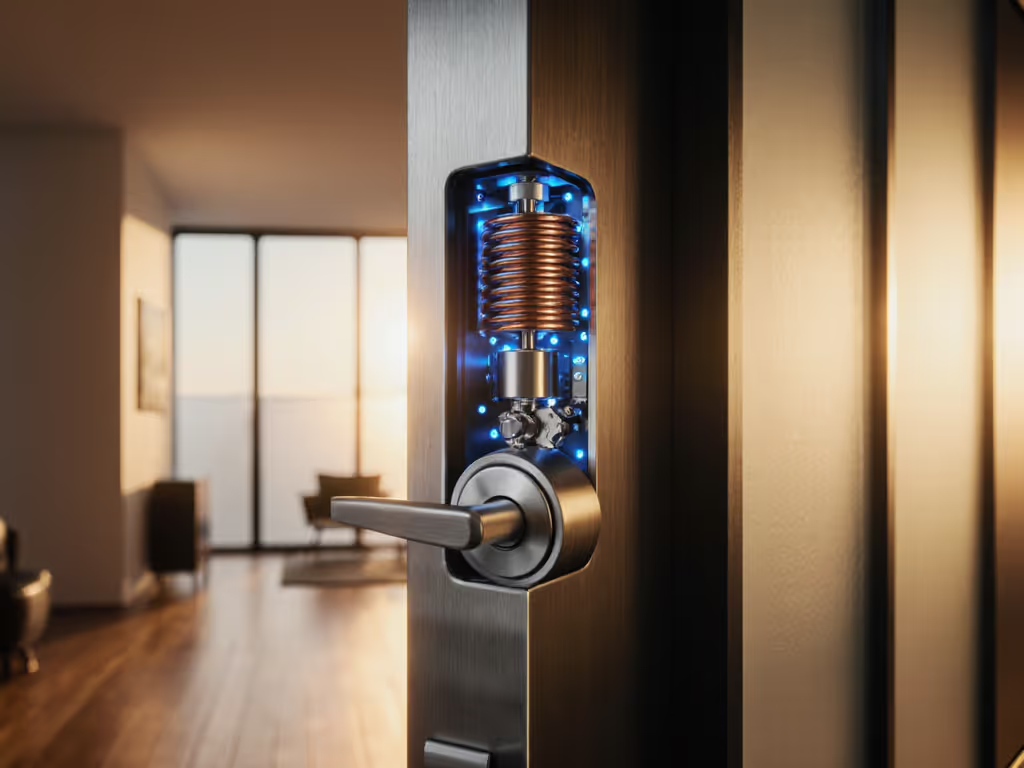
Solar Smart Locks: Never Replace Batteries Again
By Ava Thompson • 28th Apr
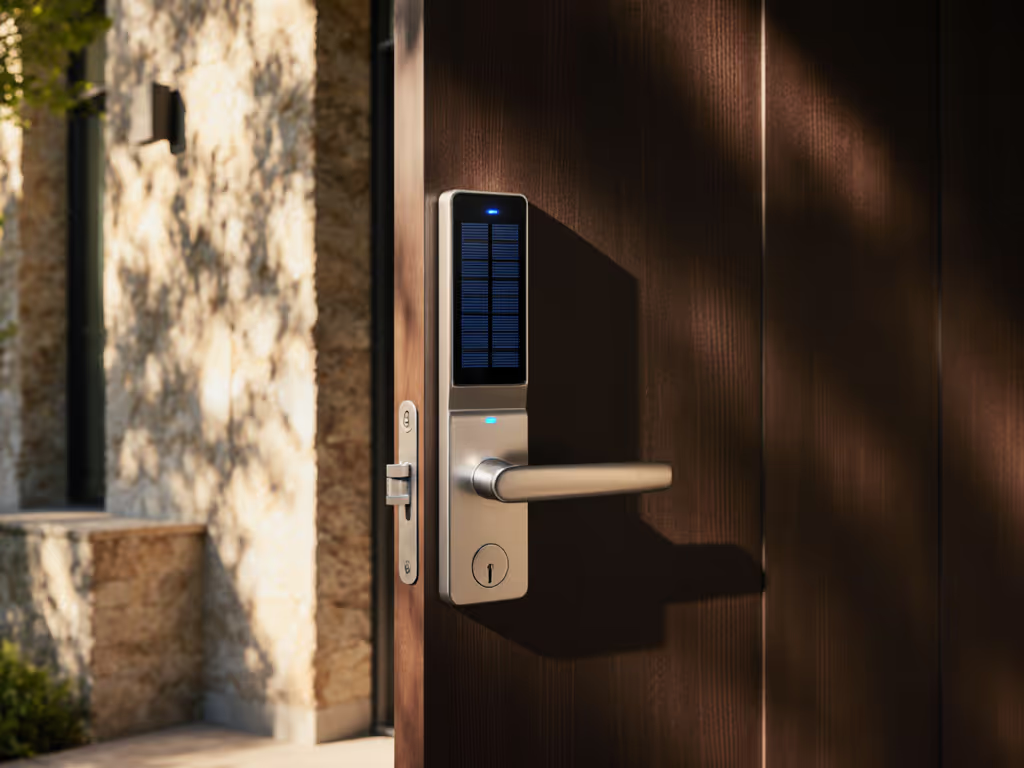
Transparent photovoltaic smart locks and solar powered smart lock security represent a meaningful shift for homeowners and renters tired of battery replacements interrupting their security setup. Unlike traditional smart locks that drain disposable batteries every 6 to 12 months, solar-powered models harvest ambient light to maintain continuous operation, sometimes for years without intervention. But reliability in smart locks isn't about the newest power source alone, it's about starting with a mechanically sound door, then layering convenience responsibly. This guide walks through the real questions: Do they work? Will they outlast me? And can I trust them on my rental?
How Do Solar-Powered Smart Locks Actually Work?
Solar-powered smart locks operate by capturing sunlight through integrated solar panels and converting it into electrical energy, which is stored in an internal rechargeable battery. The solar panel installed on the lock harvests daylight even on cloudy days, feeding that stored energy to the lock's electronic components (sensors, communication modules, and the locking mechanism itself). This setup eliminates the need for traditional electrical wiring, making installation straightforward and non-destructive. For step-by-step help, see our easiest DIY smart lock installation guide.
The key components include the solar panel, battery storage, a smart locking mechanism, and connectivity options for remote control and monitoring. Many models combine solar charging with a backup battery as a secondary power source. Some also include USB charging or traditional battery support, ensuring the lock remains functional during extended cloudy periods or at night. This hybrid approach is where reliability enters the picture: solar energy provides the primary charge cycle, but the internal battery ensures the lock doesn't strand you when sunlight is scarce.
How Long Do the Batteries Actually Last?
This is where the numbers matter. Depending on solar exposure, battery life in solar smart locks can extend dramatically compared to traditional battery-powered locks.
Solar panels integrated into these locks can deliver extended battery lifespan:
- A quality solar cell with consistent sunlight exposure can keep internal batteries charged for 5 to 7 years for dedicated solar models.
- Hybrid models (combining solar and backup batteries) often achieve 7 to 10 years of total lifespan due to dual power sources reducing strain on any single battery.
- In optimal conditions, some solar attachments claim up to 5 years of battery extension for an existing smart deadbolt.
- Standard backup batteries alone last 6 months to a year, but solar supplementation stretches that interval considerably.
The catch: these figures depend on solar exposure. A front-facing door receiving regular direct sunlight will charge more effectively than a shaded side entrance. If your home's primary entry doesn't get much sun, you'll want to assess the installation location before committing.
Will a Solar Smart Lock Work on My Door?
Compatibility hinges on three practical factors: door thickness, frame structure, and sunlight exposure.
Door Thickness & Hardware Fit
Solar-powered smart locks require doors constructed between 1.75 and 2.25 inches thick (the standard for most wood, fiberglass, and metal exterior doors in North America). The door's edge profile affects how the lock's mounting hardware aligns with the strike plate. Doors thinner or thicker than this range can cause mechanical issues or installation complications. This is where strike plate alignment becomes crucial: a misaligned plate forces the latch to work harder, draining batteries faster and wearing the mechanism prematurely. I once helped a neighbor diagnose a smart lock that seemed to fail constantly. During a blizzard, the batteries sagged, the strike was misaligned from an earlier repair, and the backup key stuck. We warmed the latch, realigned the plate, and installed an offline keypad. Reliability returned. The lock wasn't broken. The door prep was incomplete. Secure the door; simplify the tech.
Before installation, measure your door and inspect the frame for warping or gaps. A professional assessment prevents costly returns.
Sunlight & Solar Panel Placement
Exterior doors receiving regular, direct sunlight maximize solar panel charge and reduce dependence on backup batteries. If your front or back door is heavily shaded by trees, eaves, or neighboring structures, the solar charging cycle slows significantly. Consider whether supplementary light sources are feasible, or whether an alternative power option better suits your home's geography.
Special Door Types
Glass doors typically require specialized mounting hardware, as traditional locks cannot penetrate glass. Custom solutions exist but are less common. Metal doors can accommodate solar smart locks, though signal attenuation may occur if your lock uses Wi-Fi (metal is an effective RF shield). Most modern locks use local protocols (Zigbee, Z-Wave, Thread) to avoid this issue, but verify connectivity expectations before purchase. Not sure which radio to pick? Compare Z-Wave vs Wi-Fi vs Bluetooth for real-world reliability and range.
Is This a Renter-Friendly Install?
Yes, and it's one of the strongest arguments for solar smart locks in rental scenarios.
Solar smart locks are non-destructive installations that require no electrical wiring and minimal alteration to the door frame. Most mount onto the interior or exterior of existing deadbolts without drilling into the door itself. This means you can install, use, and remove the lock without violating lease terms, leaving the rental property unchanged. For low-impact options, see our no-drill smart locks for renters. The solar panel attaches via adhesive or simple fasteners and can be detached cleanly.
For renters managing guest access at short-term rental properties, the benefit extends further: you maintain local control of access codes and time-limited guest invites without exposing your data to cloud platforms or requiring guests to install apps. The lock operates offline by default, with optional remote access via a local hub or VPN, not mandatory cloud dependency.
What About Privacy and Offline Control?
This is where solar smart locks align with a broader shift toward offline-first security.
Many solar smart lock models operate entirely locally: they don't require internet connectivity to lock, unlock, or log access events. The battery and solar panel power the mechanism and local sensors. Remote access, if you want it, comes through a separate local hub (like Home Assistant or Apple Home via a Thread border router) rather than a mandatory cloud account. This means your access logs, guest codes, and entry history stay on your device, not stored on a vendor's servers. Explore our roundup of smart locks that work offline to keep control without a cloud account.
Look for models supporting open standards: Matter over Thread, Z-Wave, Zigbee, or documented local APIs. Avoid locks that require a proprietary app or cloud account for basic unlock functionality. Many vendors bundle analytics and telemetry into their apps; a privacy-respecting model lets you audit what data is collected and gives you the choice to operate fully offline.
What's the Real-World Reliability Outlook?
Solar smart locks are as reliable as their mechanical foundation and power management. Here's what to validate:
- Strong latch torque and low spindle tolerance ensure smooth, quiet operation even on older or slightly misaligned doors. ANSI/BHMA Grade 2 or Grade 1 locks indicate robust mechanical engineering. Check the manufacturer's specifications for maximum door deviation tolerance. Good locks forgive 1/4 inch misalignment without grinding.
- Backup mechanical keys are non-negotiable. Even though the lock is solar-charged, always confirm a traditional key override exists. Smart features fail; mechanics don't.
- Weatherproofing is standard for outdoor locks, but verify the solar panel's durability against UV exposure and temperature cycling. Quality solar cells degrade gracefully over 5 to 7 years; cheap panels fail faster and provide less charge per cycle.
- Low-battery alerting should be precise and arrive well before the lock stops functioning. Inaccurate or missing alerts leave you stranded.
What Should You Do Next?
If you're considering a solar smart lock, follow this practical sequence:
- Assess your door first. Measure thickness, inspect the frame for warping, and evaluate sunlight exposure at the intended mounting point. Note the door's age, finish, and whether it sits on a rental property.
- Define your connectivity needs. Do you need remote access, or is offline-only acceptable? If you need remote functionality, verify the lock supports local hubs (Home Assistant, Apple Home with Thread, or open APIs) rather than requiring a cloud account.
- Verify compatibility and power specs. Confirm the lock fits your door thickness and frame type. Check estimated battery life under your home's sunlight conditions, not just best-case marketing claims.
- Prioritize local control and privacy. Choose models that operate offline by default, support open standards, and keep access logs local. Avoid locks that force cloud signup or bundle analytics you can't disable.
- Test before committing fully. If possible, install on a secondary door first. Verify the solar charge cycle meets your expectations over two weeks, and confirm remote access (if needed) works reliably without internet.
Solar-powered smart locks solve a genuine pain point (battery replacement), but only when the door mechanics are sound and the lock respects your privacy. Start there, and the convenience layer becomes genuine security, not false comfort.
Related Articles