Future-Proof Smart Lock Battery Technology
By Naomi Okafor • 18th Jan
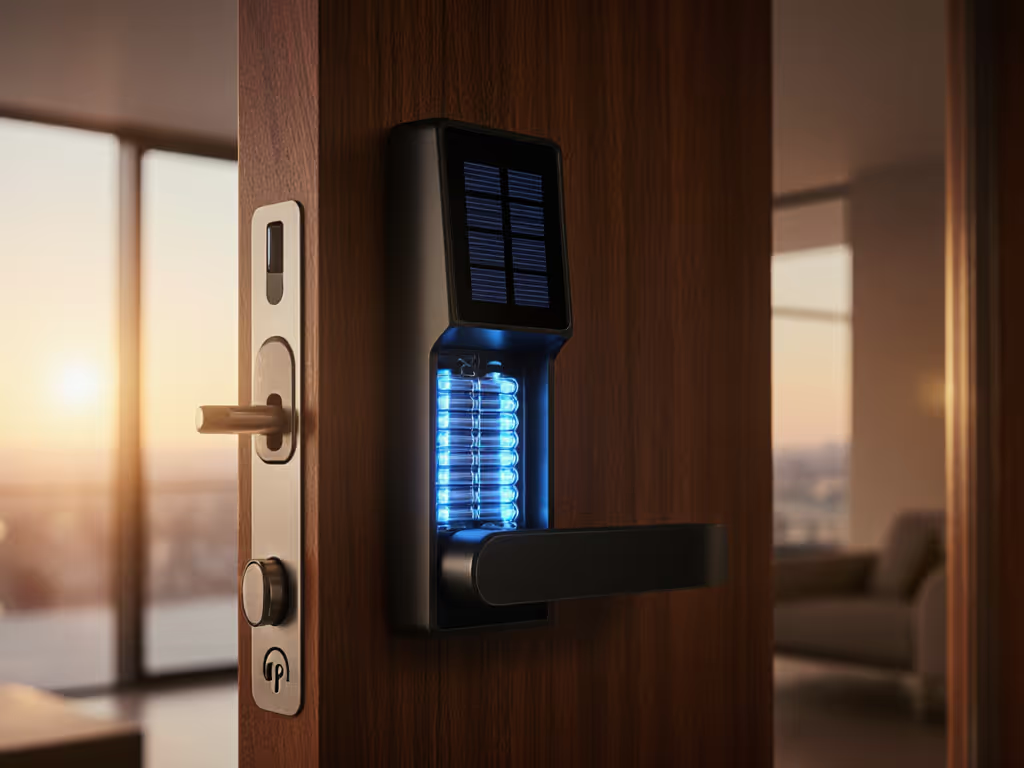
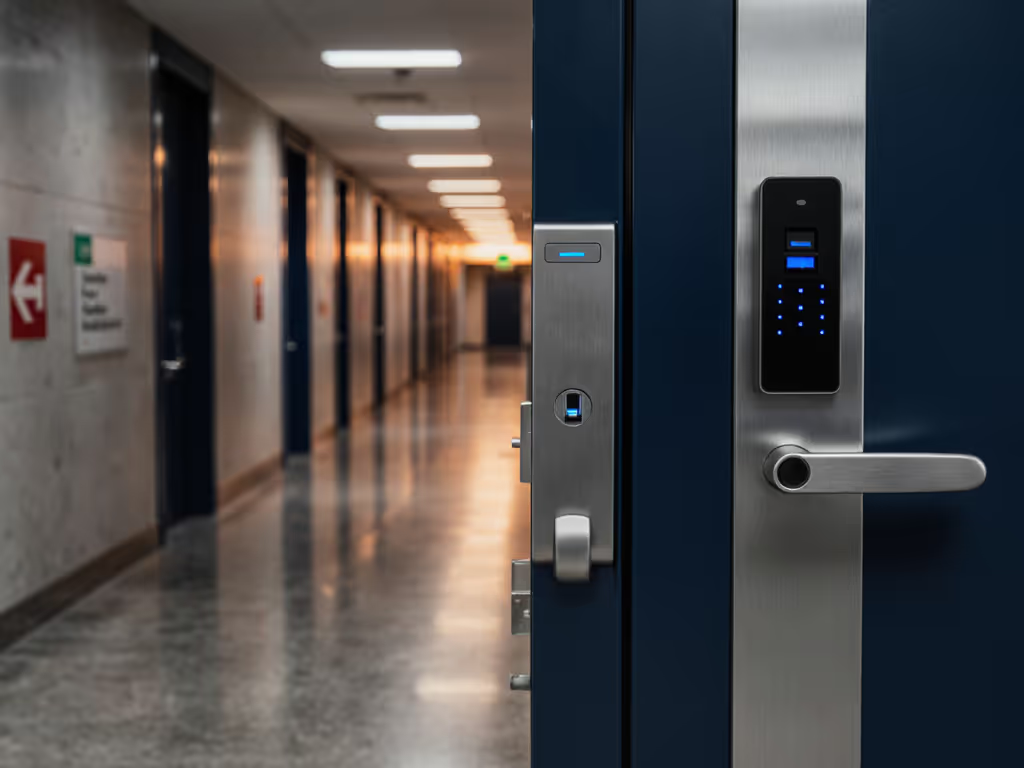
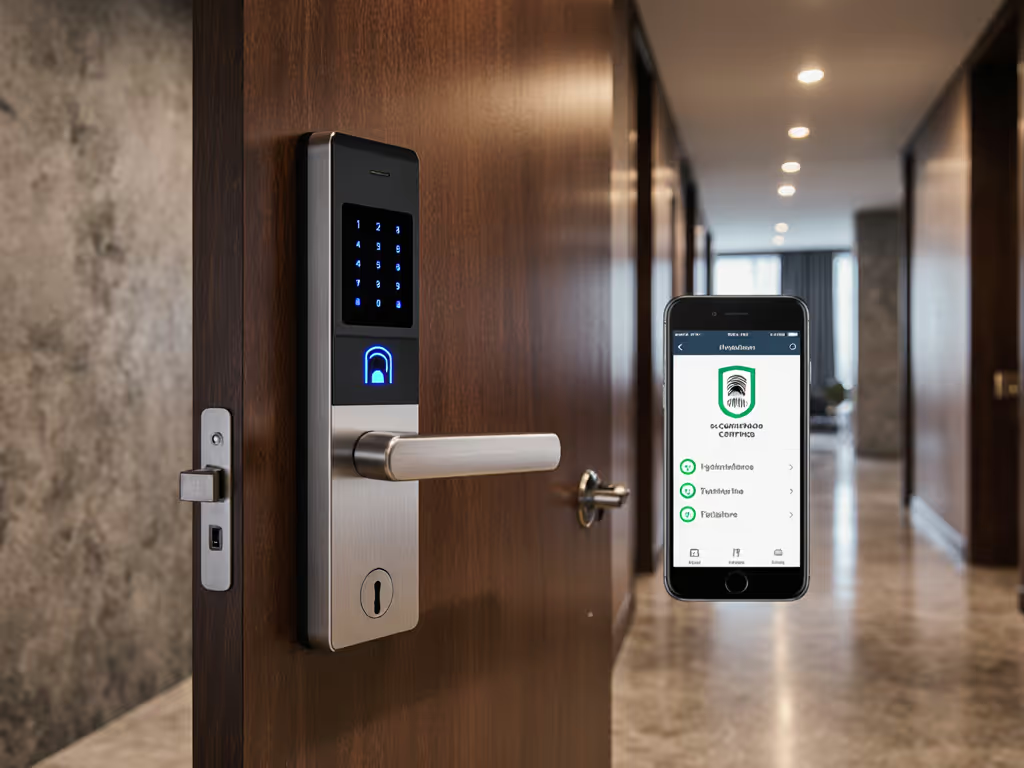
Last summer during peak season, I watched six guests fumble at their doorsteps while platform rate limits blocked remote access. Meanwhile, my spare unit (running smart lock battery technology designed for local autonomy) checked guests in flawlessly using time-bound codes. This experience cemented my belief: next-generation smart lock power isn't just about longevity, it is the foundation for privacy-respecting, platform-agnostic access control. When batteries fail or cloud dependencies interrupt, hosts become emergency technicians rather than hosts. If that happens, use our emergency 9V power fix to regain entry fast. Let's build systems where guests glide in; your data stays home, not the cloud.
Step 1: Diagnose Your Real Battery Needs (Beyond Marketing Claims)
Most reviews focus on "12-month battery life" claims, but your actual needs depend on three operational realities:
- Guest volume and staff turnover: High-turnover STRs need locks that handle 50+ daily unlock cycles without battery drain spikes
- Environmental factors: Exterior locks in northern climates drain 30% faster due to low-temperature battery inefficiency (a fact confirmed by recent Yale research)
- Security protocols: Frequent tamper checks and audit logging consume significant power
I once installed a cloud-dependent lock that advertised "6-month battery life," but its constant reconnection attempts during spotty rural internet reduced actual runtime to 7 weeks. For STR hosts, prioritize locks with local audit trails that don't require cloud connectivity for basic logging. When evaluating specs, multiply the manufacturer's "unlock cycles per charge" by 0.7 to account for real-world conditions.
Guests shouldn't be your QA - your infrastructure should work before they arrive.
Step 2: Evaluate Next-Generation Power Systems
Today's battery innovation falls into three practical categories for privacy-conscious operators:
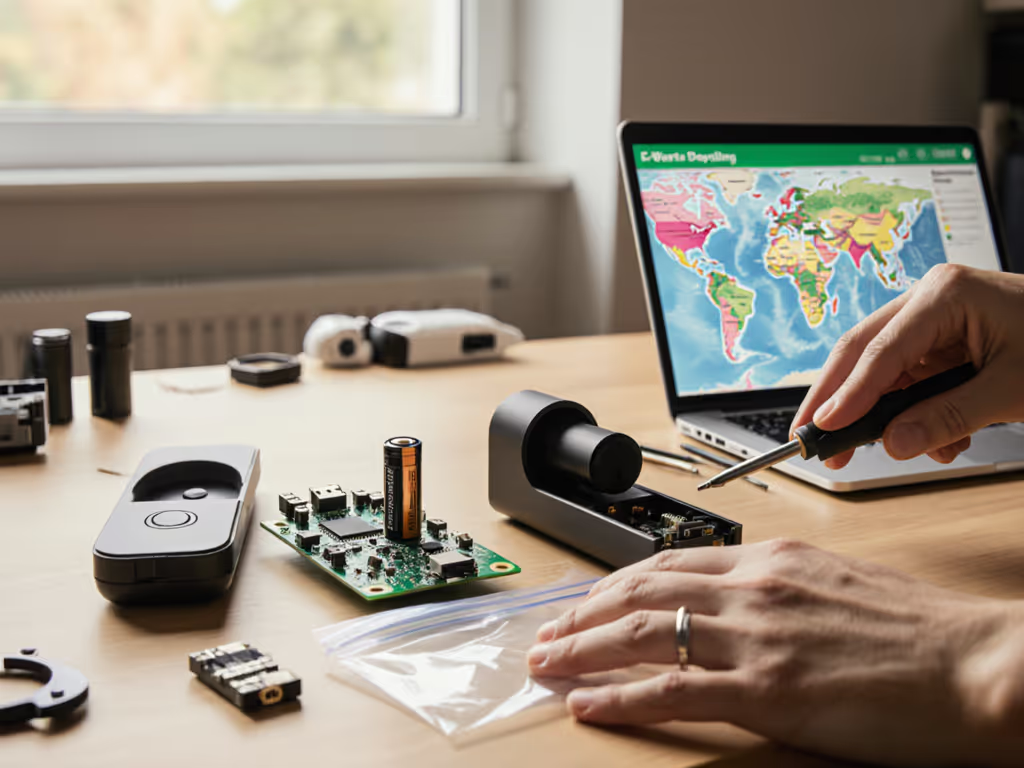
Energy Harvesting Smart Locks
These convert ambient energy into power (no replacement needed). At CES 2026, we saw:
- Optical charging: Lockin's V7 Max uses AuraCharge to harvest light (indoor or outdoor) through a 12-foot range beam
- Thermoelectric systems: Generating power from temperature differentials between interior/exterior door surfaces
- Motion harvesting: Converting the kinetic energy of turning the handle
For urban rentals where drilling isn't permitted, these eliminate battery access concerns entirely while maintaining cleaner and vendor access without cloud dependencies.
Solar-Powered Security
Don't mistake these for flimsy outdoor lights. Modern solar panels on locks like the Desloc V150 Plus use perovskite technology that generates power even in shade or overcast conditions. Key considerations:
- Verify the battery buffer size (10,000mAh+ handles 3+ cloudy days)
- Ensure non-reflective surfaces won't compromise street-level privacy
- Check if solar charging continues during lock operation
Solid-State Battery Locks
Emerging this year, these replace liquid electrolytes with solid materials for:
- 3x longer lifespan (5-7 years vs 1-2 for lithium-ion)
- Safe operation in extreme temperatures (-20°C to 60°C)
- Faster charging without degradation

Step 3: Build Your Resilience Protocol
Battery innovation means nothing without operational safeguards. Implement these non-negotiables:
Dual-Power Architecture Top commercial-grade locks now feature primary + backup power:
- Primary: Rechargeable battery (10,000mAh) for daily operation
- Secondary: Non-rechargeable CR123A (5-year shelf life) for emergencies
Unlike single-battery systems, this ensures your check-in window stays open even during extended absences. I mandate this for all my managed properties after a guest was locked out during a 3-day battery recharge cycle. For long-term resilience beyond batteries, follow our smart lock maintenance guide.
Mechanical Fallback Verification No matter how advanced the tech:
- Confirm physical key access works after installation
- Store keys in a secondary location (not attached to lock)
- Document the procedure for guests (without revealing location)
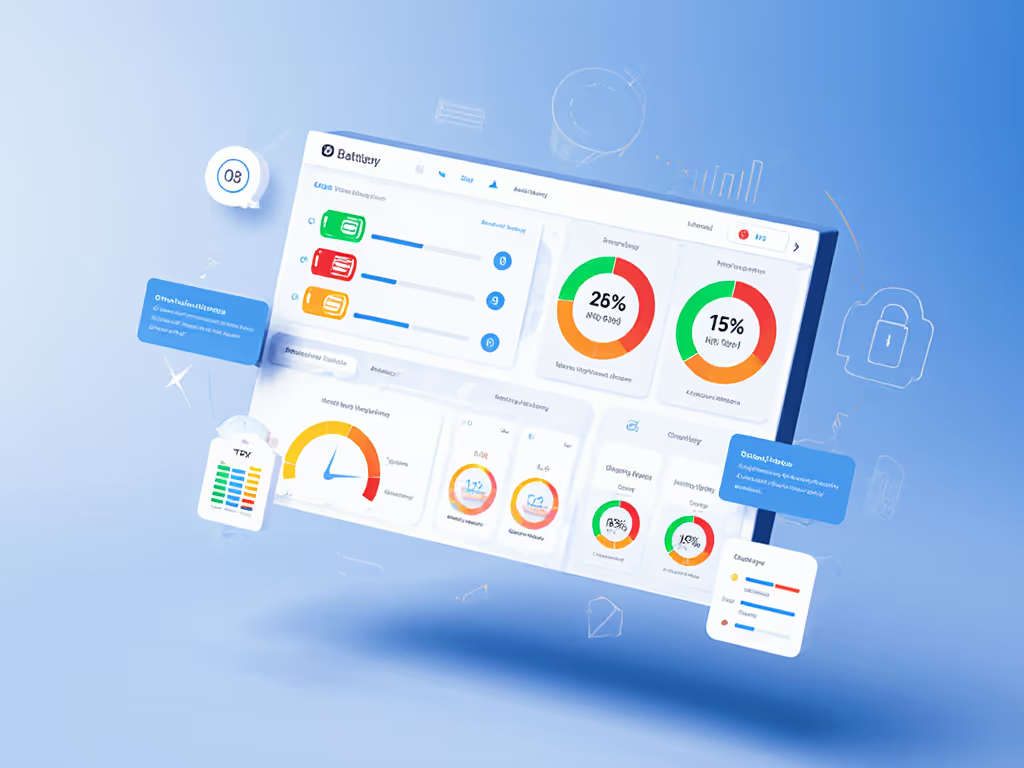
Power Monitoring Thresholds Don't rely on default settings. Customize alerts at:
- 25%: First notification to schedule battery service
- 15%: Alert to secondary contact
- 10%: Activate emergency protocol
Step 4: Test Your System Like a Guest
Before trusting your system with paying guests, simulate edge cases:
- The "Dead Battery" Scenario:
- Remove main battery 15 minutes before guest arrival
- Verify emergency power maintains time-bound codes
- Check if local audit trail records the event
- The "Internet Blackout" Test:
- Disable home internet for 72 hours
- Confirm scheduled cleaner access still works
- Verify local storage maintains all access logs
- The "Twilight Zone" Challenge:
- Test at 4AM with low external light (critical for solar models)
- Verify face/palm recognition works with power conservation mode
I once discovered a "low-battery" mode that disabled time-bound codes entirely (only by testing during actual check-in hours). Your guests won't report issues; they'll just leave negative reviews.
The Future Is Local
As Matter certification becomes standard, we're seeing true local execution, where your lock's processor handles access decisions without cloud round-trips. For a deeper understanding of interoperability and local control, read our Matter protocol smart locks guide. This isn't just about battery life; it's about platform-agnostic workflows that work when platforms fail.
When evaluating new systems, prioritize:
- Power autonomy (no cloud required for basic operation)
- Transparent battery health reporting
- Mechanical backup with physical key storage
- Emergency power options that don't require app access
The holiday weekend that reshaped my approach taught me that reliability isn't measured in battery percentage, but in unbroken guest experiences. Invest in battery-free smart lock options where possible, but always verify they maintain local control when your Wi-Fi blinks or clouds fail to deliver photons.
Guests glide in; your data stays home, not the cloud.
Explore further: Dive into the Open Matter Access Control specification to understand how local execution preserves both privacy and uptime. Your perfect guest experience shouldn't depend on Silicon Valley's server rooms.
Related Articles