
FICAM Compliant Smart Locks: Government Requirements Explained
By Kenji Sato • 20th Jan
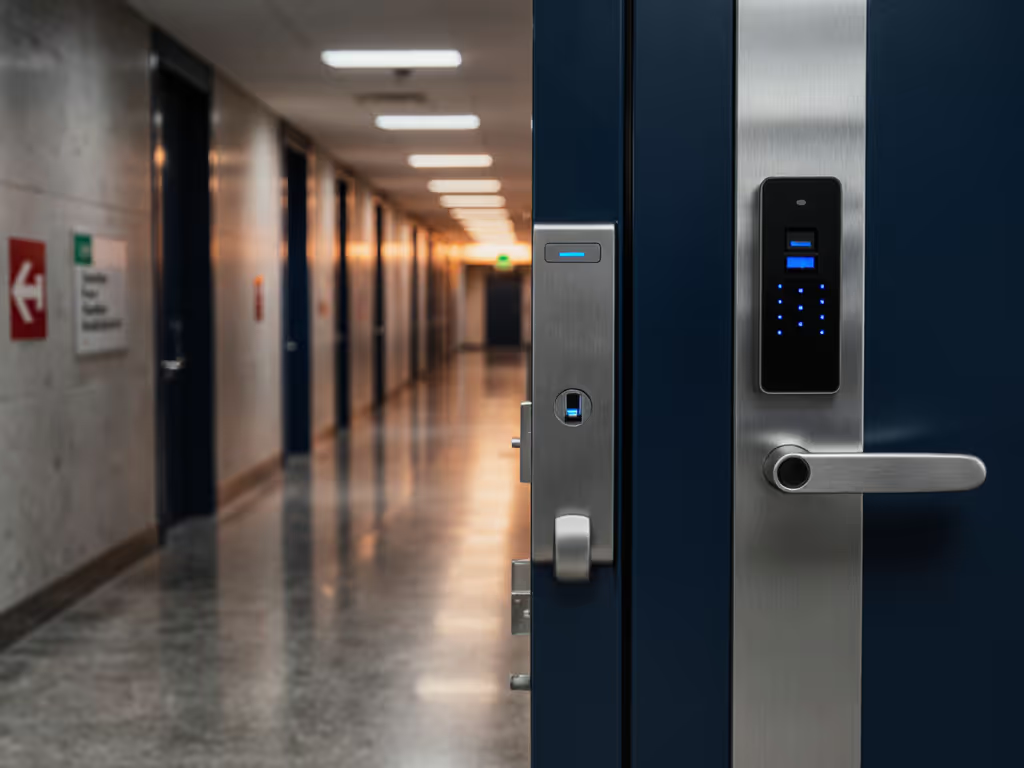
When evaluating government smart lock requirements, many consumers don't realize that military-grade security locks for classified facilities operate under strict FICAM frameworks. These standards aren't just for federal buildings (they are creating a blueprint for what truly secure, resilient smart locks should look like for everyone). As a home automation integrator focused on future-proof deployments, I've seen how government-grade security principles can benefit residential implementations when properly adapted.
What is FICAM and why should smart lock buyers care?
FICAM (Federal Identity, Credential, and Access Management) is the government-wide framework for managing identities, credentials, and access to protected information and facilities. Originating from HSPD-12 and FIPS 201 standards, FICAM mandates rigorous security protocols for physical access control systems in government facilities.
While residential users aren't required to comply with FICAM, understanding these standards helps identify locks with genuinely robust security architectures, not just marketing claims. Government requirements reveal what matters in real-world security: verifiable encryption, documented protocols, and systems that function reliably during outages. For a deeper look at attack surfaces and mitigations, see our smart lock door vulnerabilities guide. When a vendor shuts down a cloud service (as I've experienced firsthand with client deployments), only thoroughly documented systems allow for graceful migration to local controllers.
What's the critical difference between FICAM Compliant and FICAM Capable?
This distinction trips up many buyers. FICAM Compliant systems have undergone rigorous testing and certification to meet all FICAM requirements, including authentication methods, encryption standards, and interoperability. These systems are thoroughly vetted for classified facility access control environments. To understand how those certifications are validated, review our explainer on smart lock testing standards.
FICAM Capable systems possess inherent features aligning with FICAM guidelines but lack formal certification. They might support PIV card integration and cryptographic standards, but haven't passed the government's certification process.
For government facilities, compliant systems are mandatory for high-security areas. For consumers, this distinction reveals whether a manufacturer has invested in verifiable security versus making unverified claims (a critical factor when evaluating secure government infrastructure principles for your home).
How do FICAM requirements translate to physical smart lock specifications?
FICAM-compliant access systems require:
- Multi-factor authentication: Something you have (PIV/CAC card), something you know (PIN), and something you are (biometric)
- FIPS 201-2 certified hardware: Including specific cryptographic modules and secure elements
- Interoperability: With standardized protocols like those required for high-security door lock deployments
- Audit capabilities: Detailed, tamper-resistant access logs
Residential smart locks won't have PIV card readers, but the underlying principles matter. Look for:
- Local processing of authentication factors
- Hardware security modules (not just software encryption)
- Documented encryption standards (not "military-grade" buzzwords)
- Local audit logging with tamper detection
The strongest residential locks implement these principles through Matter/Thread join behavior with proper encryption handshakes, rather than relying solely on cloud verification.
What technical requirements should FICAM-aware consumers prioritize?
When evaluating smart locks claiming government-grade security, verify these technical fundamentals:
- Zigbee clusters or Matter endpoints that implement proper access control profiles
- Z-Wave S2 security framework for encrypted communication channels
- Local processing of access decisions (not cloud-dependent verification)
- BLE advertising with proper security modes for proximity-based access
- Clear documentation of bridge vs end device roles in the system architecture
Test cold starts and power cycles to verify your lock maintains security protocols during electrical disruptions, a requirement for government facilities that's equally important at home.
Many "secure" locks fail this basic test, reverting to vulnerability when power fluctuates. For outage scenarios and emergency planning, see our guide to disaster-ready smart locks. True security means maintaining protection through all operational states.
How do Matter, Thread, and other open standards align with FICAM principles?
Matter over Thread represents the closest residential equivalent to FICAM's interoperability requirements. The standard mandates:
- Local execution of automated routines
- End-to-end encryption
- Standardized device behavior
- Vendor-agnostic commissioning
These mirror FICAM's emphasis on verifiable interoperability and documented protocols. Unlike proprietary systems that collapse when vendors change policies, Matter devices maintain local functionality through protocol standardization (exactly the resilience required for FICAM compliant smart locks in government settings).
When implementing Zigbee or Z-Wave locks in security-critical environments, I verify they implement the proper security frames and maintain local control during network partitions. The strongest installations combine Matter for user interfaces with Zigbee/Z-Wave for the lock mechanism itself, creating layered security that survives individual component failures.
What should consumers look for beyond government compliance labels?
Many locks market "government-grade" security without meeting actual standards. Look for these verifiable indicators:
- Specific FIPS or NIST standard references (not vague claims)
- Documentation of security architecture available publicly
- Local API access for integration with home automation systems
- Transparent vulnerability disclosure process
- No mandatory cloud accounts for core functionality
Residential users benefit from the same principle I apply to government projects: Interoperate today, migrate tomorrow, and stay sovereign throughout. Choose locks that work with your current ecosystem but won't trap you if you change platforms.
The most critical test remains whether your system functions during internet outages, a basic requirement for government facilities that's often overlooked in consumer products. Systems requiring constant cloud connectivity violate fundamental security principles by creating single points of failure.
How can I verify if a smart lock meets genuine security requirements?
Go beyond marketing claims with these verification steps:
- Demand specific documentation of security protocols, not just buzzwords
- Test local operation during internet outages (a government requirement)
- Verify physical security ratings (BHMA Grade 1/2/3 or EN 12209/13036) Not sure what those certifications mean? Start with our explainer on ANSI/BHMA grades.
- Check for open APIs or local integration options
- Investigate the manufacturer's vulnerability disclosure history
Most importantly, document your own system behavior. When a vendor shut down its bridge, my clients with documented flows migrated to local controllers in a weekend; those without proper documentation faced weeks of vulnerability. Understanding Matter/Thread join behavior and Zigbee cluster implementations creates resilience against vendor changes.
Final Thoughts: Security Beyond Compliance
True security isn't about checking compliance boxes, it's about designing systems that maintain protection through failures, migrations, and vendor changes. Government smart lock requirements establish a baseline, but the most resilient systems exceed minimum standards through open protocols and documented behavior.
For consumers, the path forward is clear: prioritize devices with local execution, open standards compliance, and transparent security architectures. Not every home needs FICAM-level security, but everyone benefits from systems designed with verifiable security principles rather than marketing claims.
As you evaluate options, remember the core principle that guides my work: Open, documented protocols are the only sustainable foundation for smart locks. This isn't just preference, it's the difference between temporary convenience and lasting security.
To dive deeper into how specific protocols implement security standards, check NIST's documentation on FIPS 201-3 and the Connectivity Standards Alliance's Matter specification, all publicly available resources that separate genuine security from marketing spin.
Related Articles